



A test drive is the most important step in buying a pre-owned vehicle, because it’s your best chance to confirm the car drives the way it should. This used car test drive checklist walks you through the top five things to check when test driving a used car, so you can make a confident decision before you buy.
If you only have 10–15 minutes behind the wheel, focus on the items below. They reveal the most common problems shoppers miss.
1) How the car starts and idles
Before you even leave the parking lot, you can learn a lot from the start-up and idle.
What to check
- Cold start (if possible): Ask whether the vehicle has been warmed up. A cold start can reveal issues like hard starting, rough idle, or smoke.
- Idle quality: The engine should idle smoothly without surging, shaking, or dropping RPM.
- Dashboard lights: Make sure warning lights (check engine, oil, ABS, airbag) illuminate briefly and then turn off.
- Engine sounds: Listen for knocking, loud ticking, or clicking that doesn’t settle down.
Red flags during a used car test drive
- Rough idle that feels like the car is vibrating
- Noticeable burning smells
- Smoke from the exhaust (especially blue or thick white)
Tip: Turn the radio off at the beginning. You want to hear the vehicle, not a playlist.
2) Steering feel and straight-line tracking
Steering tells you a lot about tires, alignment, suspension, and how the vehicle has been maintained.
What to check
- Does it drive straight? On a flat road, the vehicle should track straight without pulling left or right.
- Steering response: The steering should feel consistent, not loose, not “wandering,” and not overly stiff.
- Vibration in the steering wheel: Shaking at certain speeds can point to tire balance issues, alignment problems, or worn suspension components.
- Turning behavior: In a normal turn, the wheel should return smoothly, and the car should feel stable.
Red flags
- Pulling to one side even on a level road
- Steering wheel shake at highway speeds
- Clunking noises when turning into a parking spot
3) Braking performance
Brakes should be predictable, smooth, and quiet. Braking issues can be safety concerns, and repairs can add up quickly.
What to check
- Pedal feel: The brake pedal should feel firm, not spongy, and not sink toward the floor.
- Smooth stops: The car should stop without shaking or vibrating.
- No pulling under braking: A pull can indicate uneven brake wear or alignment concerns.
- Sounds: Some light squeak can happen, but grinding is a serious warning sign.
- Simple brake test
- In a safe area, do a few normal stops from different speeds. Pay attention to whether the steering wheel shakes or the vehicle pulls.
Red flags
- Grinding or loud scraping when braking
- A pulsing pedal (could indicate warped rotors)
- The car darts left or right when you brake
4) Transmission behavior (automatic or manual)
The transmission is one of the most expensive components to repair, so it deserves close attention during a used car test drive.
What to check in an automatic
• Shift quality: Shifts should be smooth, not harsh, delayed, or “slipping.”
• Acceleration: The car should build speed evenly. If RPM rises but speed doesn’t, that can be a sign of slipping.
• Low-speed behavior: Pay attention in parking lots, stop-and-go traffic, and when shifting into reverse.
What to check in a manual
• Clutch engagement: It should feel smooth, not jerky or overly high.
• Shifting: Gear changes should be clean, not grinding.
• Hill behavior (if safe): A weak clutch can show up when starting on an incline.
Red flags
• Hard clunks between gears
• Hesitation when shifting from Park to Drive or Reverse
• Shuddering under acceleration
5) Suspension, ride comfort, and “mystery noises”
Suspension problems often show up as clunks, rattles, bouncing, or a ride that feels unstable.
What to check
• Over bumps: Drive over uneven pavement and speed bumps at a normal, safe speed. The ride should feel controlled.
• Body control: The vehicle shouldn’t bounce repeatedly after a bump.
• Noises: Listen for clunks, pops, or rattles that get louder over rough roads.
• Cornering stability: In normal turns, the car should feel planted, not like it’s leaning excessively.
Red flags
• Loud clunking over bumps
• Excessive bouncing after bumps
• Metallic rattling that changes with speed
Quick used car test drive checklist (save this)
If you want a fast “phone notes” version, use this:
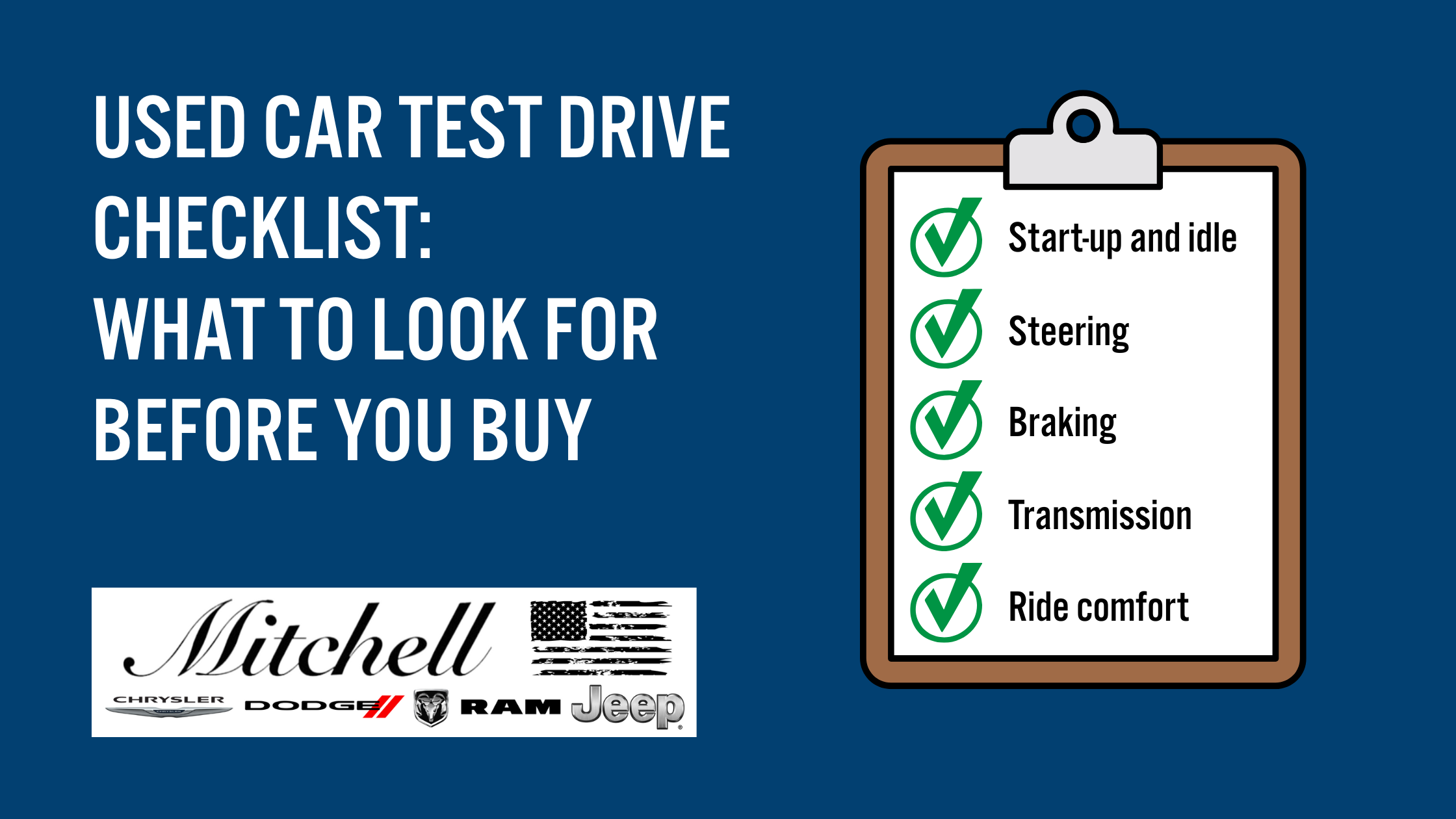
✅ Starts easily, smooth idle, no warning lights staying on
✅ Drives straight, steering feels tight, no vibration
✅ Brakes firm and smooth, no pull, no grinding
✅ Transmission shifts smoothly, no slipping or harsh shifts
✅ No clunks over bumps, stable ride, no odd rattles
Bonus: 5 quick checks people forget during a used car test drive
These don’t make the “top five,” but they can save you headaches.
• A/C and heat: Check both while driving, not just at idle.
• Windows, mirrors, locks: Make sure everything works.
• Backup camera and sensors: Confirm they function correctly.
• Cruise control (if equipped): Test on a safe road.
• Wind noise: Excessive noise can hint at worn door seals or past repairs.
What to do if you notice an issue
If something feels off during your used car test drive, don’t ignore it. Ask questions and request documentation when possible (service records, inspection notes, tire/brake condition). If you’re still interested in the vehicle, it’s reasonable to ask about having it inspected by a trusted service department before purchase.
FAQ: Test driving a used car
How long should a used car test drive be?
Ideally 20–30 minutes, including neighborhood roads and a short highway stretch, so you can check acceleration, braking, and road noise.
What should I listen for when test driving a used car?
Knocking, grinding, clunking over bumps, harsh shifting, and squealing brakes are all worth asking about.
Should I test drive a used car on the highway?
Yes, if possible. Highway speeds can reveal vibration, alignment issues, wind noise, and transmission behavior you might not notice on surface streets.
Ready to Test Drive a Used Car in Enterprise, AL?
When you’re ready to take the next step, Mitchell Chrysler Dodge Jeep Ram in Enterprise, Alabama makes it easy to shop, finance, and maintain your next vehicle, all in one place.
- Browse our Used Inventory: Find used cars, trucks, and SUVs available now.
https://www.mitchellcdjr.com/searchused.aspx - Explore Financing Options: Apply online, estimate payments, and learn about auto loan options before you visit.
https://www.mitchellcdjr.com/finance.aspx - Keep Your Vehicle in Great Shape: Schedule service with our certified team for maintenance, inspections, and repairs.
https://www.mitchellcdjr.com/service.aspx
Connect with us

Recent Blog Entries
Categories
